

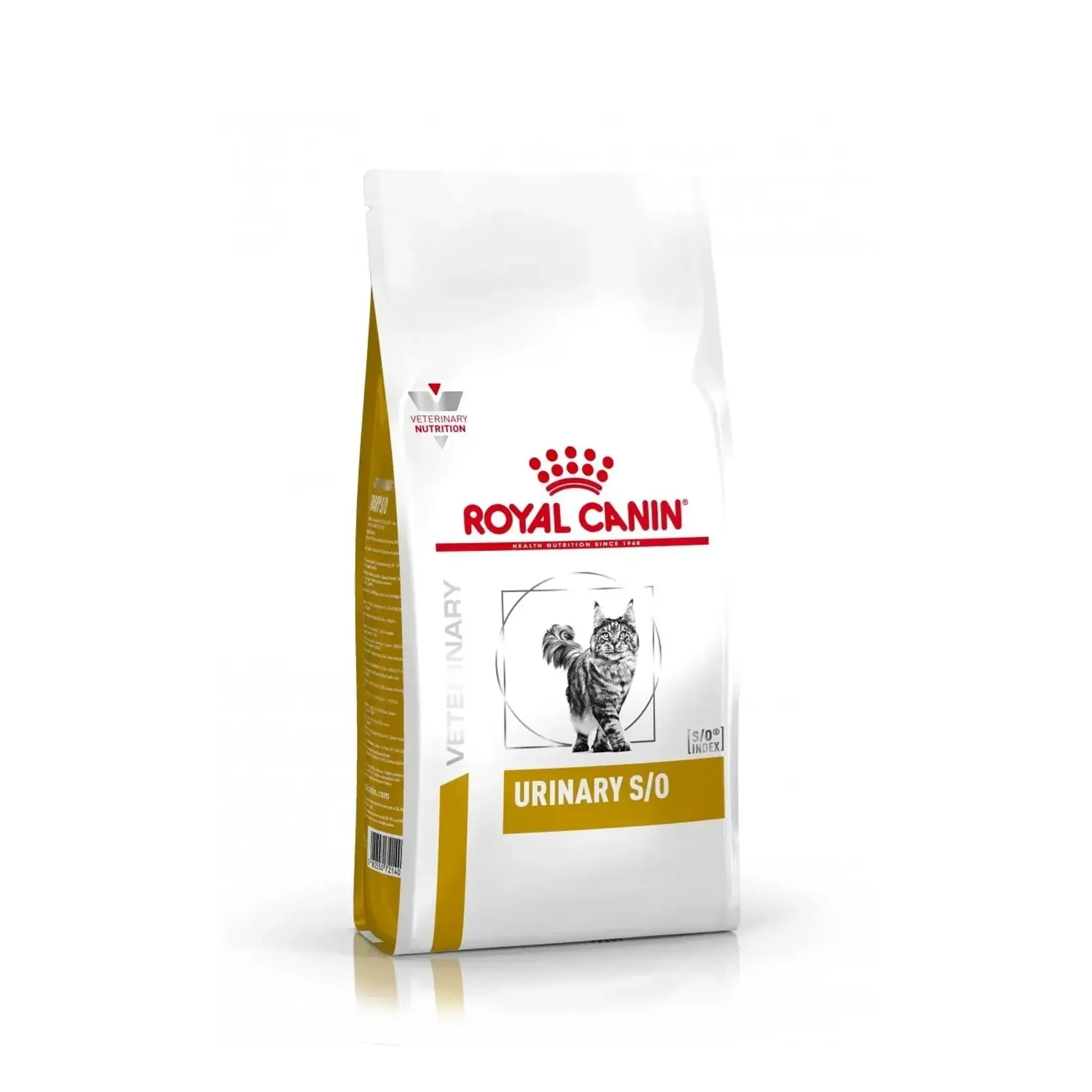
When a cat is diagnosed with urinary tract disease, the veterinarian’s first intervention is almost always dietary. Among prescription urinary diets, Royal Canin’s Urinary S/O formula has been in clinical use for over two decades and remains one of the most frequently recommended options in veterinary practice worldwide. That longevity raises a practical question for cat owners: does the clinical evidence hold up in everyday use, and what does the experience of actually feeding this diet look like over weeks and months?
This article looks at both dimensions. The first half covers what the formula is designed to do and the science behind its efficacy claims. The second half addresses the practical side: palatability, transition, long-term feeding, and the real-world situations where the diet performs well and where it has limitations.
What the Urinary S/O Formula Is Designed to Do
The S/O designation refers to struvite and oxalate, the two most common types of urinary crystals in cats. Most urinary diets address one crystal type by manipulating urine pH, typically acidifying the urine to dissolve struvite. The challenge is that acidified urine creates conditions more favorable to calcium oxalate formation. The S/O formula attempts to manage both risks simultaneously by targeting a urine environment with low relative supersaturation (RSS) for each crystal type independently.
Relative supersaturation is a measure of how close the urine is to the saturation point for a given crystal. When RSS exceeds 1, crystals are thermodynamically likely to form or grow. The goal of the S/O diet is to maintain RSS well below 1 for both struvite and calcium oxalate, which requires balancing urine pH, magnesium, phosphorus, calcium, and urine volume simultaneously.
The formula achieves this through several mechanisms:
-
Controlled magnesium and phosphorus to reduce struvite precursor availability
-
Moderately elevated sodium to stimulate thirst and increase urine output, diluting mineral concentrations
-
A protein and mineral balance that produces urine pH in the 6.0 to 6.5 range without pushing into the acidic range that promotes oxalate
-
An energy-dense formulation designed to maintain body condition in cats that may have reduced appetite during or after a urinary episode
Clinical Evidence for Efficacy
Struvite Dissolution
The strongest evidence for the S/O formula covers struvite dissolution. Multiple controlled studies have demonstrated that cats fed the diet exclusively show radiographic evidence of struvite urolith dissolution within 4 to 12 weeks, depending on stone burden and urine output. The dissolution mechanism relies on producing urine that is undersaturated relative to struvite, which causes existing crystals to gradually dissolve into the urine and be excreted.
This is clinically meaningful because the alternative for struvite uroliths is surgical removal or urohydropropulsion, both of which carry anesthetic risk. A diet-only dissolution protocol avoids intervention when it succeeds, though it requires radiographic monitoring to confirm progress and rule out oxalate stones (which will not dissolve and must be removed).
Prevention of Recurrence
Beyond dissolution, the formula has been evaluated for recurrence prevention in cats with a history of struvite disease. Long-term feeding studies have shown significantly lower rates of crystal recurrence compared to standard commercial diets, with some studies reporting recurrence rates below 15% over 12-month follow-up periods in cats maintained exclusively on urinary therapeutic diets.
For oxalate prevention, the evidence is more limited by the nature of the condition. Oxalate uroliths cannot be dissolved, so prevention trials measure new stone formation rather than dissolution. The RSS-based formulation shows favorable oxalate supersaturation scores in feeding trials, but long-term clinical recurrence data for oxalate specifically is less robust than for struvite.
Urine pH and Dilution Data
Published feeding trial data consistently shows that cats fed the S/O dry formula produce urine with pH between 5.9 and 6.4, with urine specific gravity lower than cats fed standard maintenance diets. The dilution effect from the elevated sodium content is one of the more studied aspects of the formula. Critics have raised questions about long-term sodium exposure and renal implications, a point addressed further in the limitations section below.
Palatability: What Owners and Cats Actually Experience
Clinical efficacy is only meaningful if the cat eats the food. Palatability is the variable that most often determines whether a therapeutic diet succeeds in practice, and it is the area where owner experience diverges most from study conditions.
In controlled feeding trials, palatability for the S/O dry formula is generally reported as acceptable, with most cats consuming their daily caloric target without supplemental encouragement. In practice, the picture is more varied.
Cats That Accept the Diet Readily
Cats that already prefer dry food, eat on a schedule rather than free-grazing, and are accustomed to Royal Canin products generally transition to the S/O formula without significant resistance. These cats tend to show good compliance throughout the treatment period, and owners report stable or improved urinary symptoms within the first month.
The kibble size and texture in the S/O dry formula are consistent with Royal Canin’s standard adult cat dry range, which helps cats already familiar with the brand accept the switch more readily. The aroma is distinct from standard maintenance formulas, which can work in either direction depending on the individual cat.
Cats That Resist the Diet
Cats that are accustomed to wet food, have strong food preferences, or are older with established eating habits are more likely to resist the switch. In these cases, the most common owner experience is partial acceptance: the cat eats enough to maintain body weight but not enough to achieve the therapeutic sodium-driven water intake that drives urine dilution.
For cats that refuse the dry formula outright, the S/O wet formula is an alternative that typically shows better acceptance in fussy eaters while providing additional hydration benefit. Some veterinary nutritionists recommend starting the transition with the wet format and introducing dry incrementally once the flavor is accepted.
The Transition Period: A Practical Timeline
Most negative owner experiences with urinary therapeutic diets occur during the first two weeks of transition, when the cat is adjusting to a new flavor, texture, and feeding routine. A structured transition significantly reduces both gastrointestinal upset and food refusal.
A reliable schedule:
-
Days 1 to 3: 25% S/O formula, 75% previous food
-
Days 4 to 6: 50% S/O formula, 50% previous food
-
Days 7 to 9: 75% S/O formula, 25% previous food
-
Day 10 onward: 100% S/O formula
If the cat shows reluctance at any stage, holding at that ratio for two to three additional days before advancing is more effective than pushing forward and triggering a full refusal. Warming wet food to near body temperature and mixing a small amount of low-sodium broth into the kibble during the early transition phase are commonly used acceptance strategies.
One critical point: cats, particularly overweight cats, should never go without eating for more than 24 to 48 hours. Prolonged food refusal in cats creates serious risk of hepatic lipidosis. If the cat is eating less than half of its normal caloric intake after five days on the new diet, veterinary guidance is appropriate before continuing.
Long-Term Feeding: What to Expect After the First Months
For cats with a confirmed history of urinary disease, the S/O formula is typically prescribed as a long-term or permanent diet rather than a short-term treatment. This raises practical questions that do not come up in short-duration clinical trials.
Weight Management
The S/O dry formula is energy-dense. Cats maintained on free-choice access to the kibble are at moderate risk for weight gain over time, particularly indoor, neutered cats who are already predisposed to obesity. Portion-controlled feeding with twice-daily meals is strongly preferred over free-grazing, both for weight management and for the urinary pH benefits of scheduled feeding (urine pH is more stable and predictable with meal feeding than with continuous grazing).
Royal Canin produces a Urinary S/O + Calm variant and a weight management variant within the urinary category for cats with concurrent weight concerns. Veterinary guidance on caloric targets by body weight provides the most reliable portion guidance.
Concurrent Kidney Disease
A portion of older cats with urinary disease also have early-stage chronic kidney disease. The S/O formula’s elevated sodium content, intended to drive urine dilution, is a concern in cats with compromised renal function. Sodium restriction is generally recommended in feline kidney disease management, which is directly at odds with the urinary S/O formulation strategy.
This is one of the more common clinical dilemmas in feline internal medicine. In cats with both conditions, a veterinary internal medicine specialist can weigh the relative risks and recommend either a kidney diet with urinary monitoring, a blended feeding approach, or a prescription diet designed to address both conditions simultaneously. The S/O formula alone is not appropriate for cats with moderate to advanced kidney disease without veterinary oversight.
Monitoring During Long-Term Use
Cats on long-term urinary therapeutic diets benefit from periodic urinalysis to confirm the diet continues to produce target urine pH and that crystal formation has not resumed. Standard practice is a recheck urinalysis 4 to 6 weeks after the diet change to confirm efficacy, followed by every 6 to 12 months in stable patients. Some owners use home urine pH strips between veterinary visits to monitor pH trends, though these do not replace laboratory urinalysis for a complete picture.
Where to Find the Formula and What to Look for When Purchasing
The S/O formula is a prescription diet and requires veterinary authorization in most markets. It is available through veterinary clinics and authorized online retailers that verify prescription status before dispensing. For owners sourcing it independently, the royal canin urinary so product page provides the dry formula with verified product origin. When purchasing any therapeutic diet outside a clinic, confirming that the seller is an authorized distributor is important both for product integrity and for ensuring the formula is the correct variant for the cat’s diagnosed condition.
The product line includes several variants beyond the standard dry S/O: a wet formula in both loaf and gravy formats, a high-dilution (S/O High Dilution) dry formula with higher sodium for cats that need more aggressive urine dilution, and combination bags. Veterinary prescription will typically specify which variant is appropriate.
Limitations and When the Formula May Not Be the Right Fit
Oxalate-Only Disease
For cats whose only confirmed stone type is calcium oxalate, the S/O formula’s struvite dissolution capability is irrelevant. Oxalate stones require surgical removal regardless of diet. In these cases, a diet targeting oxalate prevention specifically, with adequate moisture and controlled oxalate precursors, may be more appropriate than the S/O dual-target formulation, depending on the cat’s overall profile and concurrent health status.
Cats with Elevated Sodium Sensitivity
The sodium-driven urine dilution mechanism that makes the S/O formula effective in healthy adult cats becomes a liability in cats with hypertension, heart disease, or renal insufficiency. These conditions require sodium restriction that directly conflicts with the S/O formulation. For these cats, increasing urine volume through wet food volume rather than dietary sodium is a better strategy.
Cats That Will Not Accept the Dry Format
Some cats never fully accept a kibble they did not grow up eating, regardless of transition patience and palatability strategies. For these cats, the wet S/O variants are clinically equivalent in terms of pH and RSS targets. If neither format is accepted, a veterinary nutritionist can formulate an alternative therapeutic approach, though options are more limited outside the prescription diet category.
Frequently Asked Questions
How long does my cat need to stay on the S/O diet?
For dissolution of struvite crystals, the diet is typically continued until imaging confirms complete dissolution, usually 4 to 12 weeks, then transitioned to a maintenance urinary diet for prevention. For cats with recurrent idiopathic cystitis or a strong history of crystal formation, lifelong maintenance on a urinary diet is often recommended. The prescribing veterinarian determines the appropriate duration based on individual history.
Can I give treats while my cat is on the S/O diet?
Ideally, no. Even small amounts of non-urinary food introduce mineral loads and pH variability that can undermine the therapeutic effect, particularly during the dissolution phase. If treats are necessary for behavioral reasons, the veterinarian can advise on the least disruptive options. Once on a long-term maintenance protocol, some veterinarians allow very limited amounts of a compatible treat.
My cat was on S/O and did well. Can I switch to a cheaper urinary food?
Switching from a prescription therapeutic diet to a commercial urinary support food after successful treatment is a common question. Commercial urinary support foods provide general pH and mineral management but are not held to the same clinical testing standards as prescription diets. For cats with a mild single episode and no strong recurrence risk factors, a high-quality commercial urinary diet may be adequate. For cats with confirmed stone disease, recurrent episodes, or multiple risk factors, remaining on the prescription formula is the more conservative choice. This decision should be made in consultation with the treating veterinarian.
Is the S/O formula safe for healthy cats?
The formula’s elevated sodium and controlled mineral profile are calibrated for cats with urinary disease, not healthy adults. Feeding it to a healthy cat long-term is not generally recommended because the sodium load is unnecessary and the mineral restrictions are not calibrated for maintenance of a healthy cat’s needs. Healthy cats in a multi-cat household should not regularly eat a urinary therapeutic diet intended for another cat.
Final Assessment
The Royal Canin Urinary S/O formula occupies a well-evidenced position in veterinary therapeutic nutrition. Its dual-crystal approach, built on RSS methodology and feeding trial data, gives it a more rigorous scientific foundation than most commercial urinary support products. For cats with confirmed struvite disease, it remains a first-line recommendation, and the clinical track record for dissolution and recurrence prevention is strong.
The practical limitations are real but manageable. Palatability resistance during transition is the most common obstacle and is usually solvable with patience and the wet format alternative. Concurrent conditions like kidney disease or hypertension require veterinary guidance before the formula is appropriate. Weight management requires portion control rather than free access.
For cat owners navigating a urinary diagnosis for the first time, the most important step is getting a confirmed diagnosis of crystal type before selecting a diet. The S/O formula is an effective tool for the conditions it is designed to address. Used correctly, with veterinary oversight and appropriate monitoring, it gives most cats a meaningful reduction in urinary disease burden over the long term.